

A friend introduced me to butterfly gardening several years ago. I have always enjoyed watching butterflies, but the idea of using plants to attract them to my garden was new. It is very easy and there are a lot of great plants that both butterflies and humans enjoy. I walked out in my garden to find a Pipevine swallowtail sipping nectar on a native Firebush, snapped the photo above and was hooked.
There are two types of plants needed in the garden to attract butterflies.
Larval host plants: These plants attract butterflies to lay eggs and allow larvae to eat the plants and grow to the chrysalis stage. Yes, you are providing plants to serve as a restaurant and hotel for caterpillars.
Nectar plants: These plants attract adult butterflies who use their long proboscis (similar to a tongue) to sip the sweet nectar from the flowers. This is dining for adult butterflies. They tend to like tubular flowers like hummingbirds, so planting for butterflies sometimes does dual duty and attracts hummingbirds as well.
A swallowtail caterpillar enjoying hospitality on parsley. It ate all the parsley, but I got a beautiful butterfly.

Parsley, dill or fennel will provide hosting for Swallowtail butterflies.
Coontie cycads host the rare Atala butterfly.
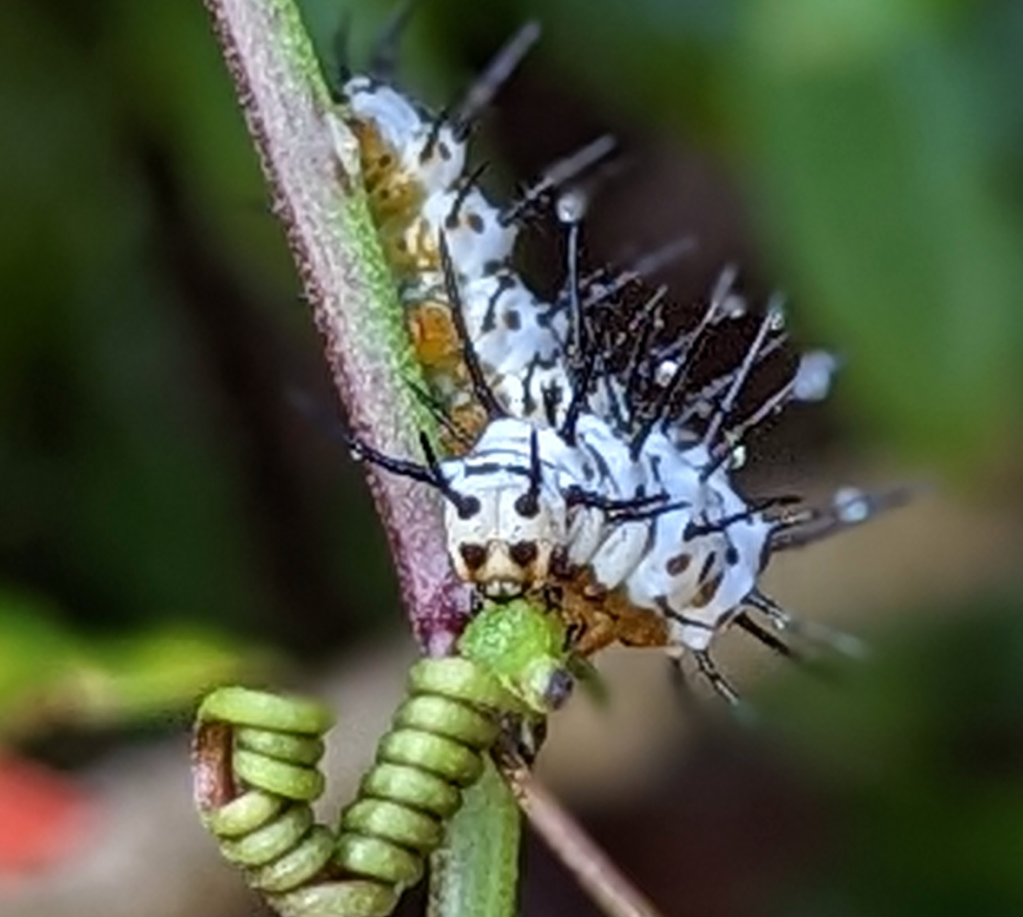
Passionflowers host our state butterfly, Zebra longwing and Gulf fritillaries.
Zebra longwing caterpillar on native Passionflower

A few local butterflies and their nectar plants. Butterflies are from the top left. Gulf fritillary on Blue Daze Evolvulus; Zebra longwing on Firebush; Black Swallowtail; White peacock on Ixora; and the orange bodied Atala laying eggs on its host plant, Coontie cycad. The Atalas like Wild Coffee shrubs for nectar.


Above are a few flowers most butterflies enjoy. In white, native plant Bidens alba; in blue, Mystic Spires Salvia and in red, Tropical Red Salvia. Firebush is my favorite butterfly shrub, other good nectar plants include : Sweet Almond Bush, Senna, Citrus, Florida Snow (the weed!), Blue Plumbago, Pentas, Zinnias, native Milkweed, Tropical Spinach Tree. Something for everybody.
It’s simple. Lose the pesticides in your garden, plant some shrubs, flowers and herbs and enjoy year round butterflies while helping to save the pollinators and the planet.
 Treasure Coast Free Press
Leave a comment