

If your lawn looks like this, please stop. I understand why this is appealing, however, I think of this as Jim Wallace Landscaping. Jim Wallace is a defunct chain of gas stations once known for their landscapes, featuring ultra green grass, gravel topped landscape beds and cheesy water features. All bad for the environment and especially our Treasure Coast rivers. Remember whatever you put on your lawn eventually ends up in the rivers. Look closely at this lawn and you may notice fungus and weeds setting in for the summer, which means more chemicals.
As a professional with decades of experience in landscaping, I became disenchanted with lawn chemicals after seeing a few asthmatic children hauled off in ambulances and chemical burns (on my) dogs feet from irresponsible use of these toxic substances. Lawn chemicals can be inhaled, absorbed through the skin or swallowed. While the chemicals can be used safely; many times the poisonings are inadvertent, caused by sprays drifting in the wind or collecting in water bodies.
Fertilizer is generally composed of nitrogen, phosphorus and potassium. Nitrogen makes things green and is a primary component in lawn fertilizers. Unfortunately for our rivers and our health, nitrogen also grows algae, really well. Many lawn care regimens include pre emergent and post emergent herbicides targeting grassy and other types of weeds, these chemicals work in different ways often disrupting hormones in plants to stop their growth and reproduction. Do they affect our hormones? The answers are murky.
Lawn chemicals are only a piece of the puzzle of water quality. And not the only culprit polluting our waters. But something homeowners can easily influence by getting rid of the turf and using other plants. Given the vast acreage of highly maintained turf grass near our rivers is it any wonder with the nitrogen and other lawn chemicals washing into our rivers our seagrasses are dying? Native seagrasses in the Indian River Lagoon provide shelter and habitat for multiple species and help keep the water clear. Everything up the food chain, eventually us is affected by poor water quality.
I think it is time to give our gas station landscapes the boot. Homeowners can stop using lawn chemicals by going natural, mowing whatever comes up that is green or using compost and other organic methods to fertilize. The downsizing of turf grass area is another tactic to lessen the impact. Planting native ground covers instead of lawn saves on water, fertilizer and impacts wildlife in a good way providing habitat for butterflies and other insects. Remember without insects, we don’t eat. It is foolish to kill them all.
I have almost gotten rid of all the St Augustine lawn at my house. Nobody likes to mow grass, especially in summer and I am offended by the wasteful amount of water it takes to maintain the lawn.
Here are a couple of different lawn replacements I am trying in my garden:

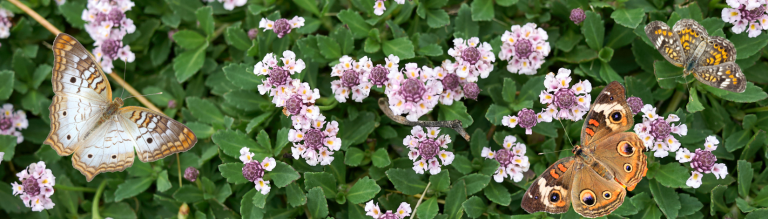
This is Turkey Tangle Frog Fruit (Phyla nodiflora) yes, really. I am not too sure what tangled turkeys have to do with anything, but it is a great name and a native wildflower. I pulled the remains of a St Augustine lawn decimated by the dry 2022 summer and began the establishment of TTFF as its replacement about a year ago. It is just starting to fill in and is known to establish slowly. It has not been mowed once. An interesting development, the University of Florida is working on developing a variety of TTFF for production of sod, I hope it works!
Eventually, this is a deep green evergreen ground cover 3-5 inches tall that may be mowed. This is a larval host plant, meaning it attracts butterflies to lay eggs and raise caterpillars, for several types of butterflies including one of my favorites, the White Peacock.

Another ground cover planting I have in the garden that could be used like a lawn is Sunshine Mimosa (Mimosa strigillosa). This is another native wildflower that hosts a butterfly, the Little Sulphur. This plant has advantages and disadvantages. The good, a pretty flower and nicely textured green foliage. It also will thrive on neglect and unirrigated sugar sand. The bad, it is not evergreen and unattractive in winter and can grow too well. It also makes woody loopy stems that are a potential trip hazard and not great for walking through. Think of it as a lawn that needs an attractive stepping stone path with a side of pruning.

There, a few ideas for less lawn, less water waste and more habitat for wildlife. Try it! Below are a few links with more information about lawn chemicals and the plants.
 Treasure Coast Free Press
Leave a comment